German corporate law firm · since 2003
Corporate law that drives your business.
Formation, M&A, restructuring, governance and dispute resolution under German law – partner-led, technology-savvy and at your service in ten offices across Germany. Advice in English.
- Attorneys, certified specialists & patent attorneys
- 10 offices, video consultations nationwide and abroad
- Retainers, fixed fees & outsourced legal department



Our key topics
Where we make the difference
 M&A – buying & selling companies
Structuring, due diligence, SPA, signing & closing – for buyers, sellers and investors.
Explore
 Reorganisation & restructuring
Mergers, demergers, changes of legal form, carve-outs and turnarounds under the StaRUG.
Explore
 Outsourced legal department
Dedicated contacts, service levels and a predictable flat fee – your legal department without fixed costs.
Explore
 Innovative legal service models
General Counsel as a Service, retainers, fixed fees, secondments and legal tech.
Explore
German corporate law – the legal framework for doing business
German corporate law (Gesellschaftsrecht) governs how companies are formed, organised and managed, how they grow and change, and how they are eventually handed over or wound up. It determines the legal relationships between shareholders, between shareholders and the company, and the responsibility of management towards the company, its creditors and the public. Its sources are diverse: the GmbH Act, the Stock Corporation Act, the Commercial Code and the Civil Code for partnerships, the Transformation Act, the Securities Acquisition and Takeover Act, the co-determination acts and a steadily growing number of European rules.
For entrepreneurs and investors, corporate law is not an abstract set of rules but a design tool. With the right legal form and well-drafted articles, liability can be limited, tax burdens optimised, investors attracted, employees given a stake and succession secured. Without clear rules, deadlock, personal liability and loss of value loom.
The life cycle of a company
Formation and structure. It all starts with the choice of legal form – GmbH, UG, AG, GbR, KG or GmbH & Co. KG – the articles of association and often a shareholders‘ agreement with vesting, leaver and exit provisions. Since the MoPeG reform, the GbR has legal capacity and can be entered in a partnership register; GmbH formations can now be completed entirely online. Growing companies should think about holding and group structures early on.
M&A and transactions. Acquisitions and disposals of companies, private equity and venture capital investments, joint ventures and public takeovers are among the most demanding projects in commercial law. What matters is the right structure (share deal or asset deal), a focused due diligence, a purchase agreement with balanced warranties and indemnities, and an early review of merger control and foreign investment screening.
Reorganisation and restructuring. Mergers, demergers, hive-downs and changes of legal form under the Transformation Act – since the UmRUG reform also across borders within the EU – allow companies to adapt to new strategies, investors or succession scenarios. In a crisis, the StaRUG and insolvency plan proceedings open up routes to a turnaround, while directors must comply with strict duties of early crisis detection and filing for insolvency.
Governance and financing. Day-to-day operations require legally sound resolutions, clarity on the rights and duties of managing directors, management boards, supervisory boards and advisory boards, capital measures and compliance – from whistleblower protection and the transparency register to the recalibrated European sustainability obligations.
Disputes, liability and succession. Shareholder disputes, challenges to resolutions, exclusion and compensation, and the personal liability of corporate officers call for fast, strategic action – before state courts, in arbitration or in mediation. At the end of every entrepreneurial career comes the question of succession, sale or orderly liquidation.
Modern engagement models
In addition to classic individual mandates, we offer models that international commercial law firms developed for large corporations – adapted for mid-sized companies: the outsourced legal department with dedicated contacts and a predictable flat fee, General Counsel as a Service, fixed-fee packages, budget guarantees and digital collaboration via data rooms and legal tech tools.
Advice for international clients
We regularly advise foreign investors, groups and founders in English on German corporate law: setting up a German GmbH or branch, acquiring German companies, joint ventures with German partners and the ongoing legal management of German subsidiaries. Our team speaks German, English, French, Spanish, Italian, Portuguese, Russian, Japanese and Korean.
Our standards
horak Rechtsanwälte is a partner-led law firm with its head office in Hanover and offices in Berlin, Bielefeld, Bremen, Düsseldorf, Frankfurt am Main, Hamburg, Leipzig, Munich and Stuttgart. Our attorneys work together with patent attorneys, engineers and natural scientists – a combination that makes the difference for technology companies, IP-driven transactions and innovative business models. We advise precisely, with commercial judgement and clear communication about costs and timelines.
36 practice areas in six fields
Our topics in German corporate law
Each tile leads to a detailed topic page with the legal basis, process, contracts and frequently asked questions.
Formation & Structure
Choice of legal form, articles of association, shareholders' agreements, holding structures and groups.
Company Formation & Choice of Legal Form
From the idea to registration: comparison of legal forms, articles of association, deed of formation, commercial register and transparency register.
Learn moreGmbH & UG
Share capital, shares, shareholder list, capital maintenance and shareholder rights in Germany's most popular legal form.
Learn morePartnerships
Reformed in 2024: GbR with legal capacity, the new partnership register, rules on defective resolutions for commercial partnerships and the GmbH & Co. KG.
Learn moreHolding & Group Structures
Setting up a holding, domination and profit transfer agreements, cash pooling, group financing and fiscal unity.
Learn morePartnership Agreements & Articles of Association
Your company's constitution: voting rights, profit distribution, transfer restrictions, succession, compensation and dispute resolution.
Learn moreShareholders' Agreements
Shareholders' agreements, vesting, leaver provisions, drag- and tag-along rights, voting agreements and VSOP or real employee participation.
Learn moreM&A & Transactions
Company acquisitions and disposals, due diligence, private equity, venture capital and joint ventures.
M&A – Buying & Selling Companies
Structuring, due diligence, SPA negotiation, signing, closing and post-merger integration – for buyers, sellers and investors.
Learn moreDue Diligence
Corporate law, contracts, employment, IP, IT, data protection, compliance and ESG: a structured review with a red flag report.
Learn moreShare & Asset Purchase Agreements (SPA/APA)
Purchase price mechanism, locked box, earn-out, warranty catalogue, indemnities, liability caps, MAC clauses and W&I insurance.
Learn morePrivate Equity & Venture Capital
Seed to Series C, investment agreements, convertible loans, buy-outs, management participations and add-on acquisitions.
Learn moreJoint Ventures & Cooperations
Joint venture companies, contractual joint ventures, governance, deadlock solutions, exit rules and antitrust review.
Learn morePublic M&A & Investment Screening
Takeover bids under the WpÜG, squeeze-outs, delisting, shareholder agreements and foreign investment screening under AWG/AWV.
Learn moreReorganisation & Restructuring
Mergers, demergers, changes of legal form, cross-border conversions, StaRUG and insolvency.
Reorganisation & Transformation
Mergers, demergers, hive-downs, changes of legal form, accretion and carve-outs – aligned across corporate, tax and employment law.
Learn moreMergers (Verschmelzung)
Merger agreement, report, audit, resolutions, creditor protection and intra-group mergers – legally secure through to registration.
Learn moreDemergers, Hive-downs & Carve-outs
Split-up, spin-off, hive-down and hive-down to a new entity: separating, selling or financing business units separately.
Learn moreChange of Legal Form
GmbH into GmbH & Co. KG, GmbH into AG, partnership into GmbH: changing the legal form while preserving identity.
Learn moreCross-border Conversions
Cross-border mergers, demergers and conversions under the UmRUG, formation of an SE and co-determination negotiations.
Learn moreRestructuring, StaRUG & Insolvency
Early crisis detection, restructuring plan under the StaRUG, debtor-in-possession proceedings, protective shield, avoiding liability and distressed M&A.
Learn moreGovernance & Financing
Ongoing support, corporate bodies, resolutions, capital measures, compliance and ESG.
Ongoing Support & Corporate Governance
Your corporate law in day-to-day business: resolutions, registers, duties of officers, governance structures and corporate housekeeping.
Learn moreManaging Directors & Management Board
Corporate office and service agreement, right to instruct, allocation of responsibilities, removal, termination, separation agreement and social security status.
Learn moreSupervisory Board & Advisory Board
Mandatory and optional supervisory boards, advisory boards in family businesses, co-determination, rules of procedure and liability.
Learn moreShareholder & General Meetings
Notice, deadlines, virtual meetings, voting prohibitions, minutes and formal determination of resolutions – legally sound and challenge-proof.
Learn moreCapital Measures & Financing
Capital increases, authorised capital, capital reductions, shareholder loans, mezzanine, convertible instruments and security.
Learn moreCompliance, ESG & Sustainability
Compliance management, whistleblower protection, transparency register, supply chain due diligence, CSRD/CSDDD after Omnibus I and anti-money laundering.
Learn moreDisputes, Liability & Succession
Shareholder disputes, D&O liability, defective resolutions, exit compensation, arbitration and succession.
Shareholder Disputes
Deadlocks, refusal of information, battles over removal, exclusion, compensation, interim relief and negotiated solutions.
Learn moreDirectors' Liability & D&O
Internal and external liability, business judgment rule, Section 15b InsO, liability for taxes and social security, discharge and D&O coverage issues.
Learn moreDefective Resolutions & Challenges
Actions to set aside and to declare void in GmbH, AG and partnerships, deadlines, release proceedings and interim relief.
Learn moreExclusion, Redemption & Compensation
Redemption of shares, exclusion for good cause, withdrawal, company valuation and compensation clauses.
Learn moreArbitration & Mediation
Corporate arbitration clauses, DIS arbitration, post-M&A disputes, expert determination and commercial mediation.
Learn moreSuccession, Liquidation & Dissolution
Family succession, MBO/MBI, sale, foundation solutions, dissolution, liquidation and deletion from the register.
Learn moreInnovative Legal Service Models & Interfaces
Outsourced legal department, General Counsel as a Service, legal tech, international matters, commercial and tax law.
Outsourced Legal Department
Your legal department without fixed costs: dedicated contacts, predictable flat fees, short response times and representation when needed.
Learn moreGeneral Counsel as a Service
An experienced partner as your part-time general counsel – plus fixed fees, budgets, secondments and legal project management.
Learn moreLegal Tech & the Digital Company
Online formation, digital register processes, virtual meetings, electronic signatures, AI-assisted contract analysis and data rooms.
Learn moreInternational Corporate Law
Market entry in Germany, foreign subsidiaries, international holdings, SE, cross-border transactions and partner firms worldwide.
Learn moreCommercial & Contract Law
Law of merchants, commercial register, Prokura, commercial agency and distribution law, general terms and conditions and enterprise agreements.
Learn moreTax Law in Corporate Matters
Choice of legal form, reorganisation tax law, share deal versus asset deal, fiscal unity, real estate transfer tax and inheritance tax.
Learn moreYour contacts
Our corporate law team
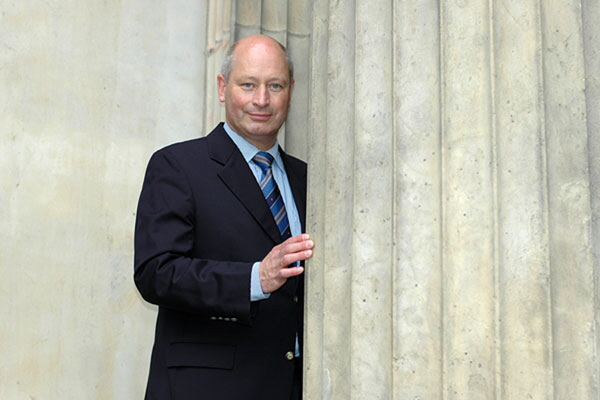
Dipl.-Ing. Michael Horak, LL.M.Attorney at Law (Rechtsanwalt) · PartnerM&A and company acquisitions · Due diligence and IP due diligenceJulia ZiegelerAttorney at Law (Rechtsanwältin) · PartnerFormation and structuring of companies · Ongoing corporate support and board work Anna Umberg, LL.M., M.A.Attorney at Law (Rechtsanwältin)Corporate law for technology and creative companies · International corporate structures and market entryAndreas FriedleinAttorney at Law (Rechtsanwalt)Shareholder disputes and litigation · Liability of managing directors and officers
 Stefan KarfusehrAttorney at Law (Rechtsanwalt)Formation and financing of start-ups · Shareholders' agreements and investment agreementsKaroline BehrendAttorney at Law (Rechtsanwältin)Public and municipal companies · Corporate law in healthcare and life sciences
 Katharina Gitmann-KopilevichAttorney at Law (Rechtsanwältin)Corporate law for media, events and sports companies · Associations, federations and spin-offs
 Robin Jannis Mai, LL.B.Attorney at Law (Rechtsanwalt)Corporate law for IT and digital companies · Data protection and IT in due diligence
 Dipl.-Phys. Andree EckhardGerman Patent Attorney (Patentanwalt)Technical and IP due diligence in company acquisitions · Valuation and transfer of patent portfolios
 Dr. Marie WagnerGerman Patent Attorney (Patentanwältin)IP due diligence in chemistry, pharma and life sciences · Patent portfolios in financing rounds and company acquisitions
Why horak Rechtsanwälte
Big-firm standards. Partner-led proximity.
We combine corporate transaction and structuring experience with technical depth: engineers, physicists and chemists in our team understand the technologies that make many companies valuable in the first place.
- Since 2003partner-led firm with dedicated contacts
- 10 officesfrom Hamburg to Munich – and by video worldwide
- 9 languagesin our team, international partner firms
- Law + technologyattorneys, specialists and patent attorneys under one roof
Contract templates
Lawyer-drafted templates – a quick start
At mustervertrag-anwalt.de you will find more than 2,400 lawyer-drafted contract templates (in German), including numerous templates for corporate law. For individual situations we tailor any template to your needs.
Corporate law templatesFAQ
Frequently asked questions on German corporate law
Short answers to questions that entrepreneurs and investors frequently ask us. For your specific situation we are happy to advise you personally.
What does German corporate law cover?
German corporate law (Gesellschaftsrecht) governs the formation, organisation, rights and duties of companies and their shareholders as well as reorganisations and dissolution. It covers legal forms such as the GmbH, UG, AG, GbR, OHG, KG and GmbH & Co. KG and is mainly found in the German Civil Code (BGB), the Commercial Code (HGB), the GmbH Act (GmbHG), the Stock Corporation Act (AktG) and the Transformation Act (UmwG).
Which legal forms are available in Germany?
The most important are the GmbH (private limited company), the UG (haftungsbeschränkt) (mini-GmbH), the AG (stock corporation), the GbR (civil-law partnership, since 2024 also as a registered eGbR), the OHG (general partnership), the KG (limited partnership), the GmbH & Co. KG and the PartG/PartG mbB for professionals. European forms such as the SE are also available. Each form has its own rules on liability, capital and management.
When is a shareholder personally liable?
In a GmbH or AG, as a rule only the company is liable. In a GbR or OHG, partners are personally and fully liable; limited partners in a KG are liable up to their registered contribution. Exceptions apply, for example, in cases of destruction of the company's existence or where capital was not properly paid in; managing directors are liable for breaches of duty, such as payments made after the company became insolvent.
What is the difference between a share deal and an asset deal?
In a share deal the buyer acquires shares in the company; the business continues with all its contracts and risks. In an asset deal individual assets are transferred, which allows a targeted selection but may require third-party consents and trigger a transfer of undertaking under Section 613a BGB.
How does a merger work under German law?
In a merger (Verschmelzung) one entity transfers all of its assets and liabilities to another and ceases to exist (Sections 2 et seq. UmwG). A notarised merger agreement, shareholder approvals, delivery to the works council and registration in the commercial register are required.
What is an outsourced legal department?
A law firm permanently takes over the tasks of an in-house legal department – with dedicated contacts, defined response times and usually a monthly flat fee. The model suits companies for which in-house lawyers are not yet economical or whose legal department needs additional capacity.
How much does corporate law advice cost?
Fees are based on the German Lawyers' Remuneration Act (RVG) or on a fee agreement. For transactions and ongoing support we frequently agree hourly rates with a budget, fixed fees for standardised services or monthly retainers.
Do you advise international clients in English?
Yes. Our team advises foreign investors, groups and founders in English and further languages on German corporate law, market entry, acquisitions of German companies and the set-up of German subsidiaries – in person at ten offices in Germany or by video conference.
Enquiry
Tell us about your matter.
We review your enquiry confidentially and get back to you with an initial assessment of the next steps and the expected costs.
- 1Send your enquiryBriefly describe the facts and your objective.
- 2ResponseWe check responsibilities, conflicts of interest and the right contact person.
- 3Initial consultationIn person, by phone or by video – with a transparent cost estimate.
Offices
Ten offices across Germany
- HanoverHead officeGeorgstraße 48, 30159 Hannover, Germany+49 511 357 356-0
- BerlinWittestraße 30 K, 13509 Berlin+49 30 403 66 69-00
- BielefeldHerforder Str. 69, 33602 Bielefeld+49 521 43 06 06-60
- BremenHollerallee 26, 28209 Bremen+49 421 33 11 12-90
- DüsseldorfGrafenberger Allee 293, 40237 Düsseldorf+49 211 97 26 95-00
- Frankfurt am MainAlfred-Herrhausen-Allee 3-5, 65760 Eschborn+49 69 380 79 74-20
- HamburgColonnaden 5, 20354 Hamburg+49 40 882 15 83-10
- LeipzigFriedrich-List-Platz 1, 04103 Leipzig+49 341 98 99 45-50
- MunichLandsberger Str. 155, 80687 München+49 89 250 07 90-50
- StuttgartKönigstraße 82, 70173 Stuttgart+49 711 99 58 55-90